
How it works
Dust control that needs no power
A fully mechanical hopper that reacts to the weight of the material passing through it.
The principle
A DustCone hopper body hangs on springs around a fixed internal cone. As material enters, its weight draws the hopper down and opens a ring-shaped gap between the hopper wall and the cone.
Entrained air is squeezed out as the material passes through the gap, so it leaves as a consolidated column instead of an aerated spray. Fines stay in the stream instead of being lifted into the air.
How it works
Self-regulating flow, driven by the material's own weight
- RestEmpty, the springs hold the hopper up and the internal cone seals the discharge.
- LoadingMaterial enters and its weight extends the springs. Entrained air escapes upward while the solids settle and consolidate.
- DischargeAn annular gap opens around the cone in proportion to the load. Material flows out as one compact column, with the fines locked in.
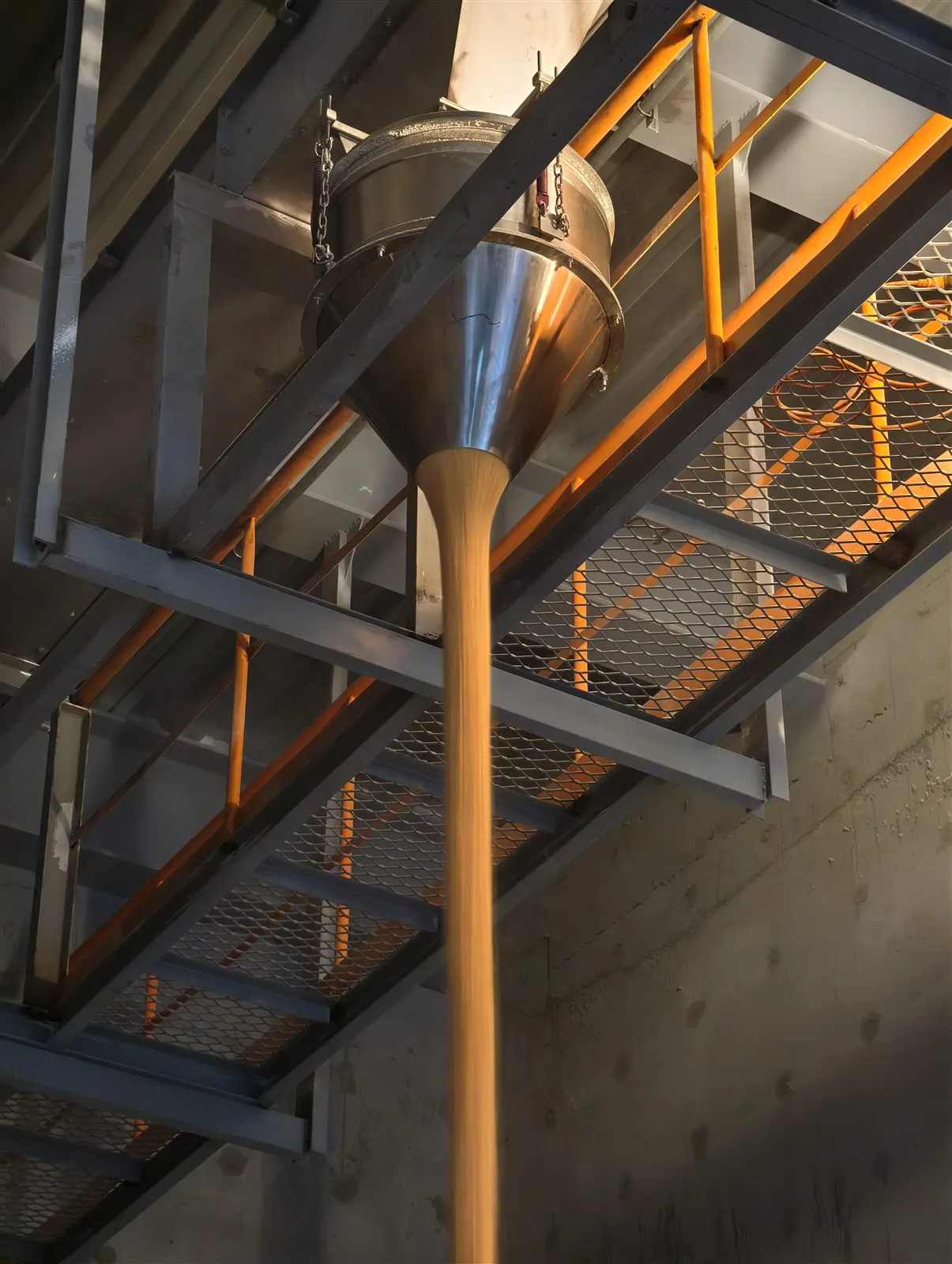
See the column
The result is a solid column of material that drives into the pile, instead of a spray that hangs in the air.
What that means in practice
- No power, filters, compressed air or control system. There are no consumables to replace.
- It follows the feed. The gap opens with the load, so the discharge tracks the feed within the hopper's design range, typically about 10 to 15% around the sized flow. A moderate change in duty can be taken up at the spring adjustment. A large step change in feed needs a different size.
- Very low maintenance. Beyond periodic inspection there is little to do. Suspension springs are made to order with steel tab ends and dip-coated, so they stay off the maintenance schedule.
- Fitted without rebuilding the plant. In most installations neither configuration needs structural change to the plant.
What DustCone reports
DustCone reports an 80 to 85% cut in visible dust at the loading point, with no power draw. Because the material lands as a consolidated column, the pile stays mixed and packs more evenly. DustCone has seen this at its own installations but has not yet measured it, so it does not quote a percentage.
Two configurations
DC series
Open-topped, and sits under an existing chute as a retrofit. Inspection windows let operators watch the fill level while it runs.
FT series
Has a flanged top that bolts to the chute outlet. The spring-hung hopper rises outside its skirt, leaving only a narrow running clearance that the material closes off once the hopper fills.
Honest about the limits
The mechanism depends on material that flows freely through the gap. Cohesive, damp or very fine materials are assessed case by case. Each unit is sized for a flow rate and tracks the feed within about 10 to 15% of it, so tell us if your rate varies widely. Where a material is borderline, a site discussion comes before any metal is cut.
Will it suit your material?
Tell us what you load and how fast. We will say plainly whether a DustCone hopper is a good fit.
Free site visits anywhere in Australia.Call (03) 7019 4163 or emailenquiries@dustwell.com.au.